EV Accessories
Roadster Evolution — 2017 vs 2026 Concept vs Actual Unveiled Car
Three Roadsters walk into a timeline. The 2017 concept that started it all, the 2026 concept the internet actually saw, and the production car that finally showed up. Here's how they compare — and which one wins.
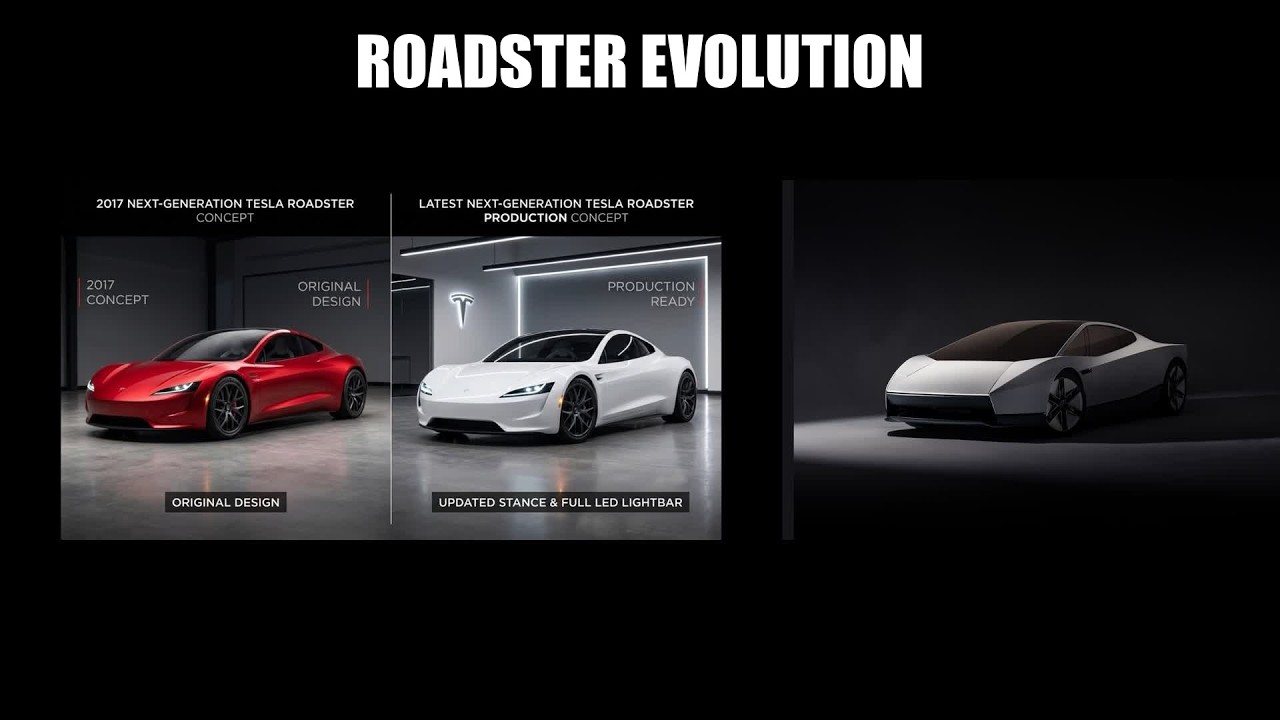
Short version: I put together a visual timeline of the Roadster across three distinct moments — the 2017 concept reveal, the 2026 concept that leaked online, and the production car that was actually unveiled on October 16. They’re not the same car. Not even close in some places. The evolution is wild to actually see side by side.
Why this video exists
After the Roadster reveal on October 16, I noticed something scrolling through the coverage. Everyone was calling it “the Roadster” — the same car, nine years later. But it’s not the same car. The 2017 concept, the 2026 concept that showed up in leaks over the summer, and the production version that rolled out on stage are three distinct designs with different priorities and different vibes.
I wanted to put them side by side and actually look at what changed — not from press photos, but from real footage and renders across all three eras. The differences are bigger than I expected.
The 2017 concept: pure aspiration
The original 2017 Roadster concept was a smooth, organic, almost biological shape. It had curved body panels, a flowing roofline, and those dramatic rear haunches that made it look like a land-speed-record car even at a standstill. The face was friendly — wide-set headlights, a gentle front edge, nothing aggressive. It was beautiful the way a yacht is beautiful: elegant, expensive, and slightly out of reach.
At the time, it was a message. Tesla was already shipping the Model 3 and the S/X refresh was underway, but the Roadster said “we can build anything.” The specs were aspirational — 1.9 seconds 0-60, 620 miles of range, SpaceX thrusters — and the design matched that energy. It looked fast, clean, and futuristic in a 2017 way.
Looking back at the reveal footage, what strikes me is how soft it looks compared to what actually shipped. The 2017 concept was a sports car designed for a world that hadn’t seen the Cybertruck yet. It was pre-edgy Tesla.
The 2026 concept: the internet’s roadster
Over the summer of 2026, renders and leaked images circulated of what people called “the 2026 Roadster concept” — a sharper, more angular take on the same idea. The smooth curves of the 2017 version got replaced with defined edges. The front end got lower and wider. The lightbar that became a signature of the production car first appeared here as a thin LED strip across the back.
This version never officially existed — it was a concept iteration that showed up in design studies and internal renders that somehow found their way to social media. But it’s important because it’s the bridge. It shows the design language shifting from “beautiful sports car” toward “Cybertruck’s evil cousin” — the transition that the production version completed.
The 2026 concept had the proportions right. The wheelbase was visibly longer than the 2017 version, the overhangs were shorter, and the stance was wider. It was starting to look like a car that would actually get built — not just a dream sketch.
The production car: mean and finished
The production Roadster that Tesla unveiled on October 16 is a different animal entirely. It’s not the 2017 concept made real. It’s a completely different design that started from the same brief and arrived at a destination the 2017 version never anticipated.
The full-width LED lightbar across the back is the most obvious change — it wraps around the corners and makes the rear end look like a signaling device, not just a taillight. The front end has sharp geometric lines that read as aggressive rather than inviting. The body panels are tighter. The mirrors are smaller and more integrated. The whole thing looks like it’s already pulling 1.5 Gs while parked.
What got better:
- The proportions are more mature. The 2017 concept had a long overhang past the rear wheels; the production car pulls the wheels to the corners.
- The stance is wider and lower. It sits like a car that knows it can back up the looks.
- The LED lightbar isn’t just a styling flourish — it’s functional signaling that takes advantage of the Roadster’s flat rear deck.
- The interior is bespoke. The 2017 concept had a speculative cockpit; the production car has a real production interior with materials that justify the price point.
What got lost:
- The organic curves. The 2017 concept was beautiful in a way the production car isn’t. It was smooth, elegant, and timeless. The production car trades that for aggression and purpose.
- The approachable face. The 2017 Roadster looked like it would let you sit in it. The production car looks like it would bite you.
- Some of the aspirational range claim. The 620-mile number from 2017 was always optimistic, and while the production car’s range is still excellent, it’s not that number.
Which one wins?
It depends on what you want. The 2017 concept is the beautiful dream — untouched by reality, unburdened by production constraints, pure design idealism. The production car is what happens when you actually decide to build the thing, and the design gets sharper, meaner, and more honest.
I think the production car is the better car. The 2017 concept is the better memory.
The production Roadster is the first car I can think of where the production version is genuinely more aggressive than the concept — and that’s rare. Usually concepts peak and production settles. The Roadster production car escalated.
Bottom line: Three Roadsters across nine years, and they’re all different designs that share DNA but not intent. The 2017 concept was a dream. The 2026 concept was the transition. The production car is the real thing — meaner, sharper, and more purposeful than anything the concepts promised. Watch the video for the full side-by-side breakdown.
As an Amazon Associate I earn from qualifying purchases. Full methodology on the How We Test page.
More EV Accessories picks
FSD v14.3 LITE Finally Arrived — Sylvie Gets the Update
After weeks of waiting and a false start, FSD v14.3 LITE is actually downloading on Sylvie right now. This is the update legacy Model S and X owners have been waiting for — 2026.38.5.1 on a 2018 Model S 100D.
I Was Wrong — The Roadster IS Being Revealed Today
Earlier today I posted a video saying the Roadster would never ship on October 15th. The countdown on Tesla's website disagrees. The reveal is happening NOW. I have never been happier to be wrong.
The Non-Existent Roadster Event — October 15th Was Never a Date
October 15 came and went with no Roadster event — because there was never one scheduled. How a throwaway line in a tweet became a date the internet decided was real.
Never miss a pick
Join the list for new gear drops, honest test results, and what actually broke.
Subscribe on YouTube